Introduction
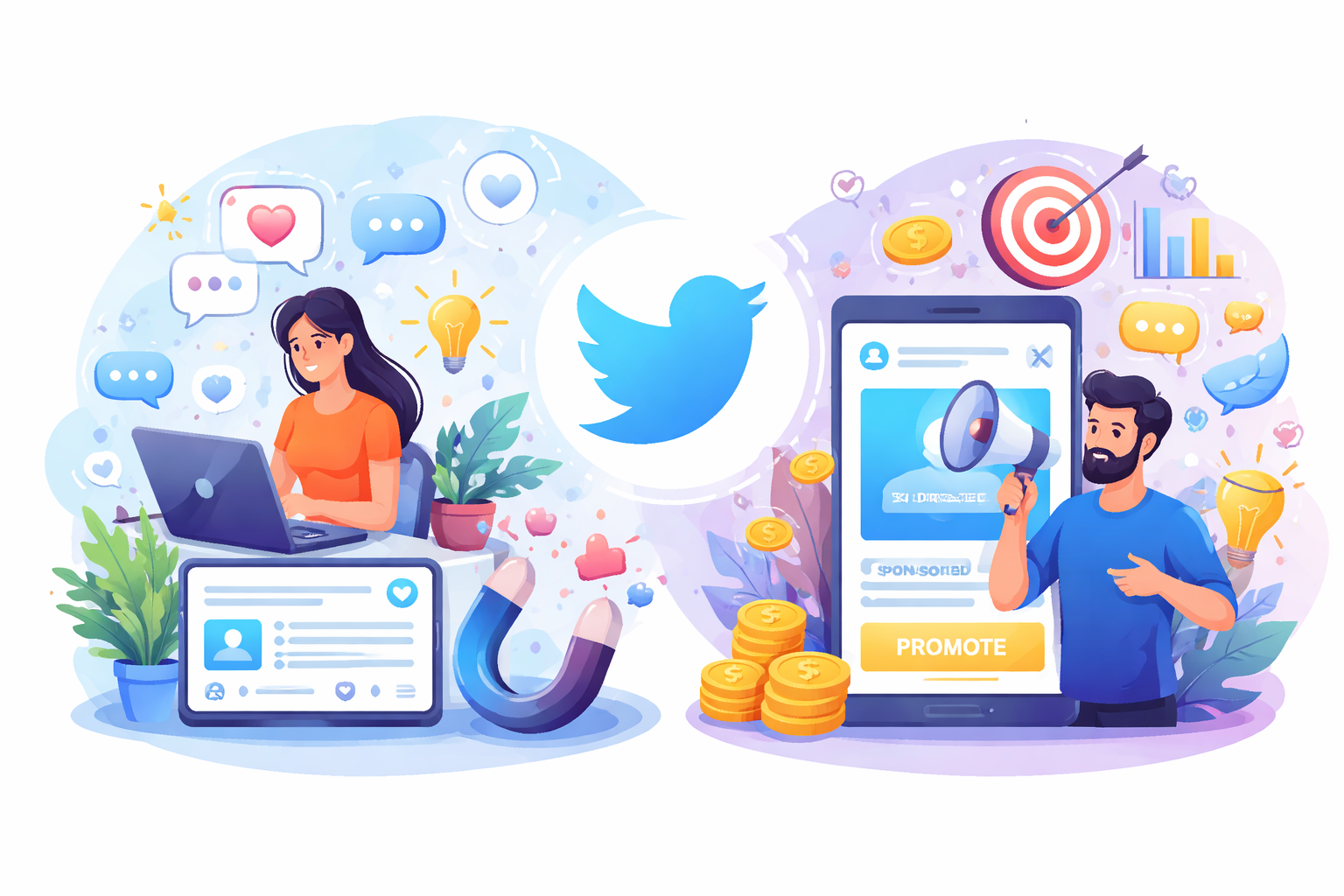
Twitter, now widely known as X, has evolved into one of the most influential platforms for brand communication, customer engagement, and business promotion. With millions of active users discussing trends, sharing opinions, and interacting with brands daily, businesses are increasingly leveraging Twitter as a marketing channel. However, one common dilemma brands face is choosing between organic Twitter marketing and paid Twitter marketing. Both approaches offer unique benefits, and understanding their differences is essential for building an effective social media strategy.
Understanding Organic Twitter Marketing
Organic Twitter marketing focuses on building an audience naturally through regular posting, engagement, and community interaction without spending money on promotions. It involves sharing tweets, threads, visuals, videos, and participating in conversations to connect with followers.
One of the biggest strengths of organic marketing is authenticity. When businesses consistently share valuable and relevant content, they build credibility and establish authority in their industry. Followers who engage with organic content often develop stronger trust in the brand, which helps improve customer loyalty and long term relationships.
Organic marketing is also cost effective, making it highly beneficial for startups and small businesses. It allows brands to build awareness without heavy financial investment. Over time, organic content creates a digital presence that supports consistent audience growth and brand recognition.
Limitations of Organic Twitter Marketing
While organic marketing offers several advantages, it requires patience and consistency. Growing an audience organically can take time, especially in competitive industries. Platform algorithms can limit the reach of posts, meaning that even high quality content may not always reach a wide audience.
Businesses relying solely on organic marketing may find it difficult to generate immediate traffic or leads. This approach works best for long term brand building rather than quick promotional results.
Understanding Paid Twitter Marketing
Paid Twitter marketing involves promoting content through advertisements to reach targeted audiences quickly. Twitter provides various advertising options such as promoted tweets, promoted accounts, and promoted trends, allowing businesses to increase visibility and engagement.
The most noticeable benefit of paid marketing is speed. Businesses can generate traffic, leads, and brand awareness almost instantly after launching campaigns. This makes paid Twitter marketing highly effective for product launches, seasonal promotions, and event marketing.
Paid campaigns also allow precise audience targeting. Businesses can reach users based on demographics, interests, behaviors, and location. This targeted approach ensures that marketing messages are delivered to users who are more likely to be interested in the product or service.
Advantages of Paid Twitter Advertising
Paid Twitter campaigns provide detailed performance tracking. Businesses can measure impressions, engagement rates, click through rates, and conversions. These analytics help marketers refine campaigns and improve return on investment.
Another advantage is scalability. Businesses can increase campaign budgets to expand reach and attract larger audiences. Paid marketing also helps brands stand out in competitive industries where organic reach alone may not be sufficient.
Limitations of Paid Twitter Marketing
Despite its benefits, paid marketing requires careful planning and budget management. Poor targeting or weak ad creatives can lead to wasted advertising spend. Paid campaigns also tend to deliver temporary visibility. Once the advertising budget ends, the promotional reach reduces significantly.
This means that relying solely on paid marketing may not create strong brand loyalty or consistent engagement over time.
Choosing Based on Business Goals
The choice between organic and paid Twitter marketing largely depends on business objectives. Businesses that aim to build trust, strengthen brand identity, and create meaningful customer relationships benefit greatly from organic marketing. It supports sustainable growth and builds a loyal audience.
Businesses looking for quick visibility, lead generation, or promotional support for specific campaigns often rely on paid marketing. It helps brands reach targeted audiences faster and achieve measurable short term results.
Why Combining Both Strategies Works Best
The most effective Twitter marketing strategies usually combine both organic and paid approaches. Organic marketing builds brand trust and maintains consistent engagement, while paid marketing amplifies reach and accelerates business growth.
Businesses can use organic content to understand audience preferences and identify high performing posts. These posts can then be promoted through paid campaigns to expand their reach. Similarly, paid campaigns can attract new followers who later engage with organic content, strengthening overall brand presence.
Role of Consistency and Data in Twitter Marketing
Consistency plays a major role in organic marketing success. Brands that regularly post informative, engaging, and relevant content are more likely to maintain audience interest and improve visibility.
Paid marketing, on the other hand, relies heavily on data driven decisions. Businesses that continuously analyze campaign performance, adjust targeting, and optimize ad creatives can achieve better results and maximize their advertising investment.
Budget and Industry Considerations
Budget plays an important role when choosing between organic and paid marketing strategies. Small businesses often focus more on organic growth while allocating limited funds to paid promotions when necessary. Larger organizations with dedicated marketing budgets frequently invest in paid advertising while maintaining strong organic engagement.
Industry competition also influences decision making. Businesses operating in highly competitive markets often require paid campaigns to gain visibility. Niche businesses with specialized audiences may achieve strong results through organic engagement alone.
Conclusion
Organic and paid Twitter marketing both play important roles in digital marketing success. Organic marketing helps businesses build credibility, trust, and long term audience relationships. Paid marketing delivers immediate reach, targeted exposure, and measurable performance outcomes.
Businesses that understand the strengths of both approaches can create a balanced Twitter marketing strategy that supports both short term campaign performance and long term brand growth. As Twitter continues to evolve as a powerful communication platform, brands that combine authentic content with strategic advertising will remain competitive and successful in the digital landscape.