
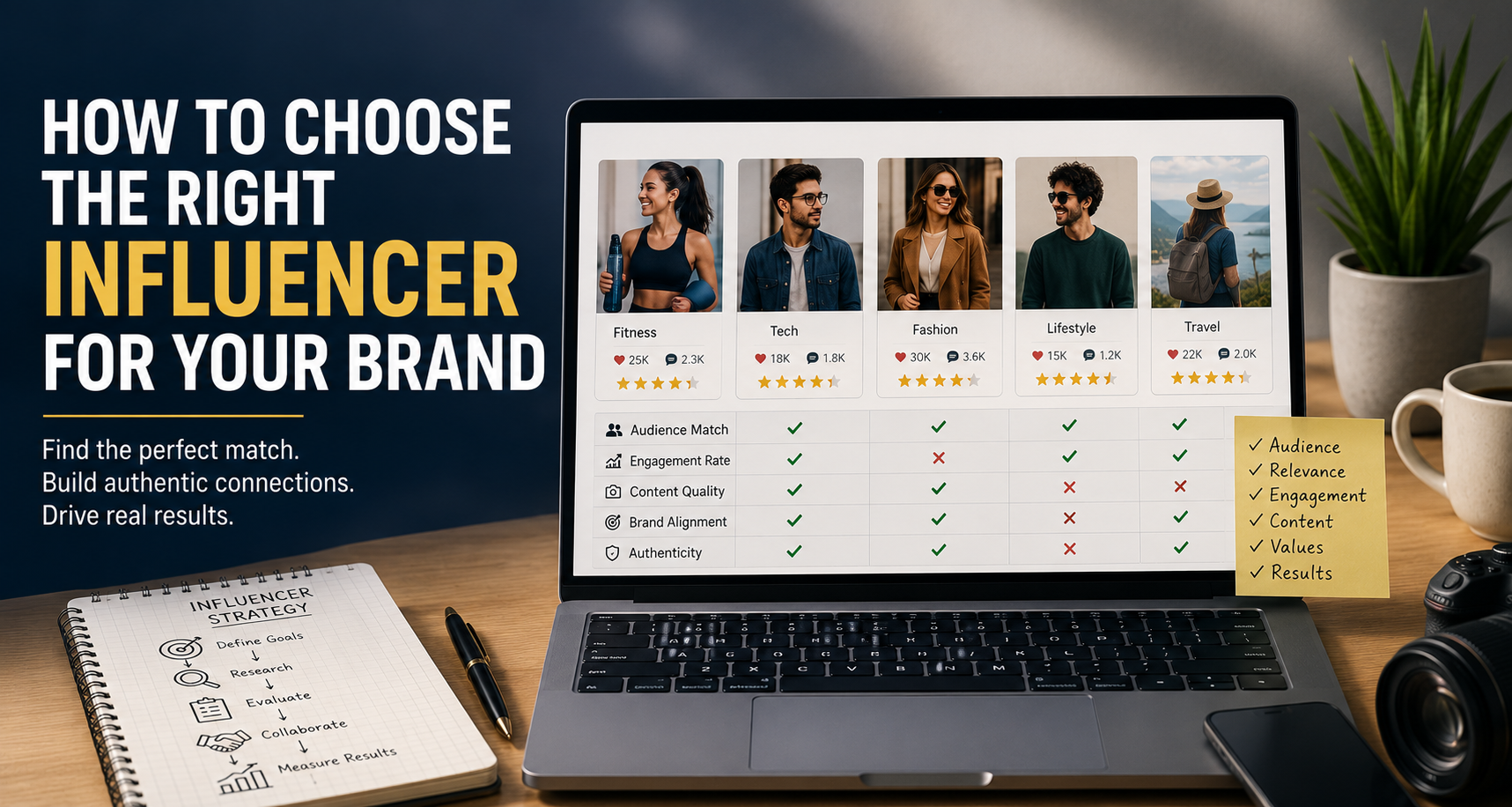
Introduction
Influencer marketing has become one of the most effective ways for businesses to build brand awareness, engage with their target audience, and drive sales. Consumers today are more likely to trust recommendations from creators they follow than traditional advertisements, making influencers a valuable part of modern marketing strategies.
However, simply partnering with a popular influencer does not guarantee success. The right collaboration depends on selecting someone whose audience, values, and content align with your brand. Choosing the wrong influencer can lead to poor engagement, wasted marketing budgets, and little return on investment.
Understanding how to evaluate influencers strategically can help your brand build authentic partnerships that generate meaningful results.
Why Influencer Selection Matters
An influencer acts as an extension of your brand. Their followers associate your business with the content they create, the values they represent, and the way they communicate with their audience.
A well-matched influencer can increase brand credibility, introduce your products or services to highly relevant audiences, and encourage genuine customer engagement. On the other hand, an influencer who lacks authenticity or whose audience does not match your target market may generate impressions without producing meaningful business outcomes.
Successful influencer marketing begins with choosing quality over popularity.
Understand Your Marketing Goals
Before searching for influencers, clearly define what you want to achieve through your campaign.
Some businesses focus on increasing brand awareness, while others aim to generate website traffic, boost online sales, launch a new product, or build a loyal community. Your campaign objective will influence the type of influencer you choose and the content they create.
Having clear goals also makes it easier to measure campaign performance and determine whether your investment delivers the expected results.
Know Your Target Audience
The most successful influencer partnerships happen when an influencer’s audience closely matches your ideal customer profile.
Consider factors such as age, gender, location, interests, profession, purchasing behavior, and lifestyle. If your products are designed for young professionals, collaborating with an influencer whose audience primarily consists of teenagers is unlikely to produce strong results.
Audience relevance is often far more valuable than follower count.
Focus on Engagement Rather Than Followers
Many businesses make the mistake of selecting influencers based solely on the number of followers they have. While reach is important, engagement provides a much clearer indication of audience trust and influence.
An influencer with a smaller but highly engaged audience often delivers better results than a celebrity with millions of passive followers.
Comments, meaningful conversations, shares, saves, and genuine interactions demonstrate that followers actively value the influencer’s content and recommendations.
Strong engagement usually translates into stronger campaign performance.
Evaluate Content Quality
The quality of an influencer’s content reflects the professionalism they bring to brand collaborations.
Review their photography, videos, storytelling style, editing quality, consistency, and overall presentation. Their content should align with your brand image and maintain a level of quality that enhances your business reputation.
Authentic storytelling often performs better than highly promotional content because audiences respond more positively to creators who naturally integrate brands into their everyday experiences.
Ensure Brand Values Align
Every brand has its own identity, personality, and values. The influencer you choose should naturally complement these characteristics.
Review their previous collaborations, public communication, opinions, and overall online presence. Consider whether their personality, tone, and messaging align with your company’s image.
A partnership built on shared values creates authenticity and strengthens consumer trust.
Analyze Audience Authenticity
Unfortunately, not every influencer has a genuine audience. Some accounts artificially inflate their follower count or engagement using fake followers or automated interactions.
Before entering a partnership, evaluate the quality of their audience. Genuine influencers typically have authentic conversations within their comments section, consistent engagement patterns, and steady audience growth.
Working with influencers who have real followers ensures your marketing budget reaches actual potential customers.
Review Previous Brand Collaborations
Past partnerships provide valuable insight into how an influencer works with brands.
Observe whether sponsored content feels natural, informative, and engaging rather than overly promotional. Excessive advertising can reduce audience trust and lower campaign effectiveness.
Influencers who carefully select partnerships often maintain stronger credibility with their followers, resulting in better performance for future collaborations.
Choose the Right Influencer Size
Influencers are often categorized based on the size of their audience.
Nano influencers typically have highly engaged local communities and are ideal for building authentic relationships. Micro influencers generally offer excellent engagement while remaining affordable for small and medium-sized businesses.
Macro influencers provide broader reach and greater visibility, making them suitable for large campaigns. Celebrity influencers offer massive exposure but often require significantly higher budgets.
The right choice depends on your objectives, audience, and available marketing resources rather than simply selecting the largest account.
Prioritize Industry Relevance
An influencer should have genuine expertise or interest within your industry.
For example, a fitness brand benefits more from collaborating with a fitness coach than a general entertainment creator. Likewise, a financial services company will likely see better results working with business professionals rather than lifestyle influencers.
Industry relevance increases audience trust and improves the likelihood of successful conversions.
Measure Performance Beyond Likes
The success of an influencer campaign should be evaluated using meaningful business metrics rather than vanity numbers alone.
Website traffic, lead generation, product inquiries, conversions, sales, email sign-ups, customer acquisition cost, and return on investment provide a clearer understanding of campaign effectiveness.
Tracking these metrics helps businesses optimize future influencer partnerships and allocate marketing budgets more efficiently.
Build Long-Term Relationships
Many brands focus only on one-time influencer campaigns. While short-term collaborations can generate visibility, long-term partnerships often deliver stronger results.
When influencers consistently recommend a brand over time, their audience develops greater trust in those recommendations. This familiarity increases credibility and improves overall campaign performance.
Building ongoing relationships with trusted creators also creates more authentic brand advocacy.
The Role of a Professional Influencer Marketing Agency
Identifying the right influencer requires careful research, audience analysis, negotiation, campaign planning, performance tracking, and relationship management.
A professional influencer marketing agency simplifies this entire process by selecting creators who align with your business goals, verifying audience quality, managing collaborations, and monitoring campaign performance.
With expert guidance, businesses can maximize their return on investment while avoiding costly mistakes that often occur when influencer partnerships are managed without proper strategy.
Conclusion
Influencer marketing is no longer about choosing the person with the highest follower count. Successful campaigns are built on authenticity, audience relevance, strategic planning, and measurable business outcomes.
By focusing on engagement, content quality, audience demographics, industry relevance, and shared brand values, businesses can create influencer partnerships that generate real trust and long-term growth.
Whether you are launching a new product, increasing brand awareness, or driving sales, selecting the right influencer is one of the most important decisions in any influencer marketing strategy. When done correctly, influencer collaborations become far more than promotional campaigns—they become meaningful relationships that help brands connect with customers in genuine and lasting ways.